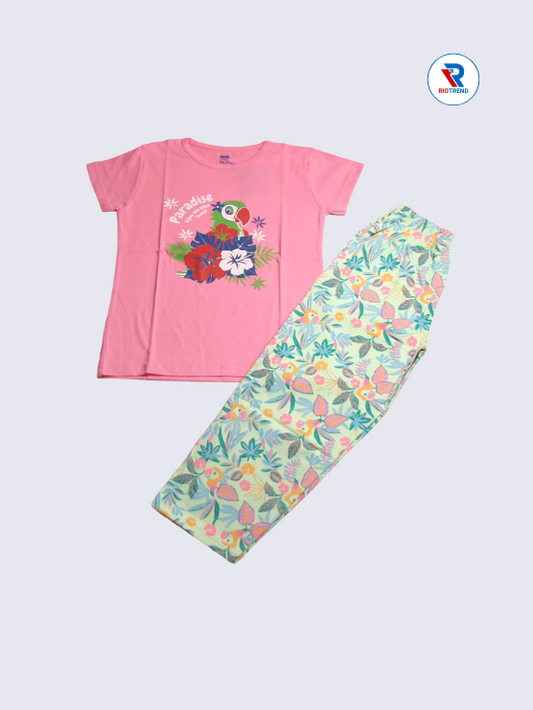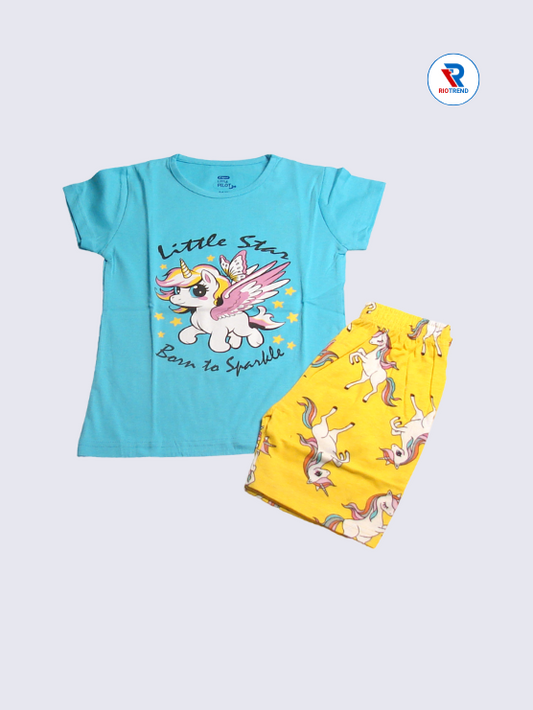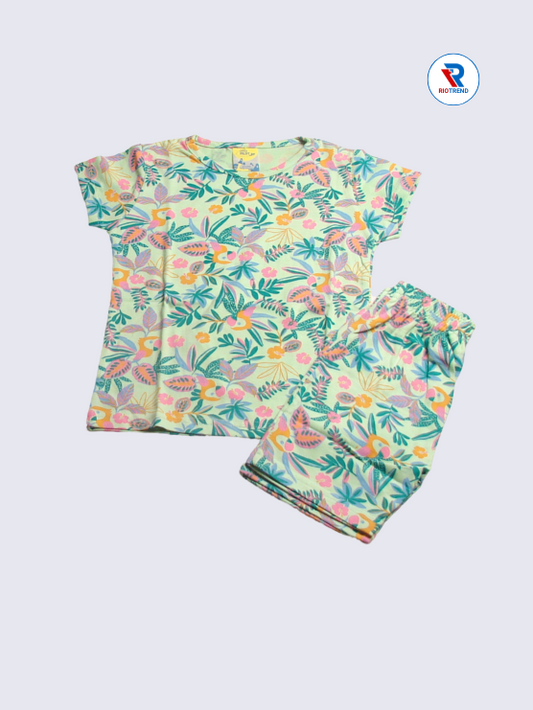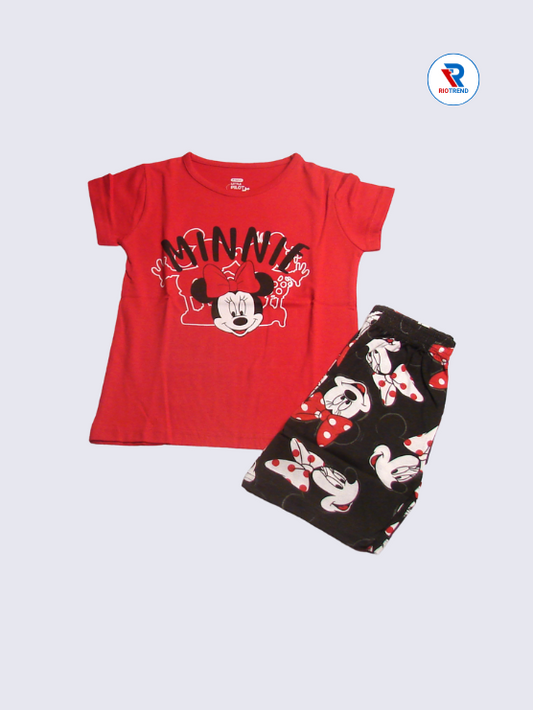

You open a shopping app to buy something as simple as a phone charger. Twenty minutes later, you have twelve tabs open, three price comparison screenshots, a half-read review thread, and you still haven't clicked "Buy Now." Sound familiar?
This isn't a lack of discipline. It isn't "overthinking" in the way people casually use the term. It's a well-documented psychological phenomenon called Choice Overload, and it is quietly shaping — and often sabotaging — how millions of Indian shoppers make everyday purchase decisions online.
In this guide, we're going to break down exactly what Choice Overload is, why your brain reacts to it the way it does, how it shows up differently across categories like fashion, electronics, groceries, and home goods, and — most importantly — what you can actually do about it the next time you find yourself stuck scrolling instead of buying.
This is a long read, deliberately so. Choice Overload isn't a one-line problem, and it doesn't deserve a one-line answer.
What Is Choice Overload, Really?
Choice Overload (also called the "paradox of choice," a term popularized by psychologist Barry Schwartz) describes a very specific and counterintuitive situation: having more options doesn't make decision-making easier — past a certain point, it makes it dramatically harder.
We're conditioned to believe that more choice equals more freedom, and more freedom equals more satisfaction. Ten years ago, if you wanted to buy a pressure cooker, you had maybe four or five options in your local market. Today, a single search on any Indian e-commerce platform can return 200+ pressure cookers — different brands, materials, sizes, price points, warranty terms, and thousands of reviews attached to each one.
Logically, more options should mean you're more likely to find the "perfect" one. In practice, something else happens:
- Your decision-making slows down significantly
- Your confidence in whatever you eventually choose goes down, not up
- You experience more regret after the purchase, even if the product is perfectly fine
- In many cases, you abandon the purchase altogether
This is Choice Overload in action — and it is one of the biggest silent reasons Indian online shoppers add items to cart and never complete checkout.
The Psychology Behind Why Your Brain Struggles With Too Many Options
To understand how to fight Choice Overload, it helps to understand what's actually happening inside your head when you're staring at a wall of near-identical products.
1. Cognitive Load and Decision Fatigue
Your brain has a limited amount of mental energy for active decision-making at any given time. Psychologists call this cognitive load. Every additional option you have to compare — price, rating, delivery time, return policy, material, color, size chart — adds to that load.
When you're comparing five options, your brain can hold the differences in working memory fairly easily. When you're comparing thirty options, it can't. So your brain starts taking shortcuts: skimming instead of reading, judging by price alone, or judging by whichever option is visually largest on the screen — not necessarily the one that's actually best for you.
This mental exhaustion has a name too: decision fatigue. It's the same reason you might make a poor, rushed choice at the end of a long day of shopping, even though you were extremely deliberate about your first few decisions.
2. The Fear of Making the "Wrong" Choice
When there are only three options, the cost of choosing "incorrectly" feels small — you were never going to consider the other 197 alternatives anyway, because they didn't exist in your mental frame. But when there are 200 visible options, your brain assumes that somewhere in that pile is a "perfect" one, and choosing anything less than that perfect option starts to feel like a loss.
This is closely tied to a concept called anticipated regret — the discomfort you feel before you've even made the purchase, because you're already imagining how you'll feel if a "better" option existed that you missed. Ironically, this fear often causes people to delay the purchase entirely, or choose the safest, most generic-looking option just to avoid the discomfort of comparison.
3. Diminishing Marginal Satisfaction
There's a well-established finding in behavioral economics: each additional option you're given adds less and less genuine value, while adding more and more mental cost. The tenth option you compare adds barely any new information compared to the ninth — but it still costs you time, attention, and mental energy to process.
Eventually, the mental cost of comparing more options outweighs any real benefit they add. You cross into what researchers call the "overload threshold," and that's exactly where stress, hesitation, and cart abandonment take over.
4. The Paradox of Higher Expectations
Counterintuitively, having more choices also raises your expectations of the outcome. If you only had two shirts to choose from, you'd be reasonably happy with either. But if you had access to two hundred shirts, you start expecting the "perfect" one to exist somewhere in that pool — and when your final pick turns out to be merely "good," it feels disappointing by comparison, even though the shirt itself hasn't changed at all.
This is why post-purchase regret is often higher, not lower, when you had unlimited options to choose from.
How Choice Overload Shows Up in Everyday Indian Online Shopping
Choice Overload doesn't look the same in every category. Understanding where it hits hardest can help you recognize it happening to you in real time.
Fashion and Apparel
This is arguably the category where Choice Overload is most intense for Indian shoppers. A single search for "cotton kurta" or "formal shirt" can return hundreds of near-identical listings, differentiated only by subtle variations in color, fit, fabric blend, or price by a few rupees. Add in size charts that vary from seller to seller, and you have a recipe for hours of comparison — and often, a cart that gets abandoned because the shopper simply gives up trying to decide.
Electronics and Gadgets
Buying a mobile phone, earphones, or a laptop today means wading through spec sheets, comparison charts, YouTube reviews, star ratings, and dozens of near-identical models across different price brackets. The stress here comes from a fear of "spending money on the wrong specs" — shoppers worry about processor speed, battery life, camera quality, and warranty terms simultaneously, without necessarily having the technical background to weigh them confidently.
Groceries and Daily Essentials
You'd think buying something as routine as cooking oil or rice would be simple — but even here, Choice Overload creeps in. Different brands, pack sizes, "organic" vs "regular" labels, and price-per-kg calculations across dozens of options can turn a five-minute grocery top-up into a prolonged, frustrating comparison exercise.
Home and Kitchen Products
Categories like cookware, storage containers, or small appliances are especially prone to Choice Overload because the differences between products are often technical and hard to judge from photos alone — material quality, thickness, coating durability — leading shoppers to rely heavily on reviews, which themselves can be overwhelming in volume and contradictory in opinion.
The Real Cost of Choice Overload to You as a Shopper
It's easy to dismiss Choice Overload as a minor annoyance, but it has real, measurable costs to you as a buyer:
1. Wasted time. Hours spent comparing near-identical products is time you don't get back — time that could be spent on literally anything else.
2. Increased stress. The mental fatigue of comparing dozens of options doesn't just affect the purchase itself; it can spill over into irritability and reduced patience for the rest of your day.
3. Lower satisfaction with your final choice. As we covered above, more options often lead to less confidence in whatever you eventually pick — even if it's objectively a good product.
4. Decision paralysis and abandoned purchases. Sometimes the stress of choosing becomes so overwhelming that you simply close the app or the tab and buy nothing at all — even though you genuinely needed the product.
5. Impulsive, poorly-reasoned final choices. Paradoxically, extreme overload can also push you the opposite direction — into a rushed, careless pick just to escape the discomfort of comparison, which increases the odds of buyer's remorse.
How to Protect Yourself From Choice Overload: A Practical Framework
The good news is that Choice Overload is a well-studied problem, and there are concrete, practical techniques you can use to shop smarter and with far less stress. Here's a framework you can apply the next time you're staring at a long list of options.
Step 1: Define Your "Must-Haves" Before You Start Browsing
Before you even open the search results, write down (mentally or literally) the two or three non-negotiable criteria that matter most to you — budget range, size, a specific feature, or delivery timeline. This single step does more to reduce Choice Overload than almost anything else, because it lets you filter out 80% of irrelevant options before you even start comparing.
Step 2: Use Filters Aggressively
Most online shopping platforms allow you to filter by price range, rating, size, color, brand, and more. Use every filter that's relevant to you before you start scrolling through individual listings. A list of 200 products filtered down to 15 relevant ones is a completely different (and far less stressful) decision-making exercise.
Step 3: Set a Firm "Comparison Limit"
Give yourself a hard rule: compare no more than 5–7 options in detail. Research on Choice Overload consistently shows that satisfaction and decision confidence peak somewhere in this range — beyond it, added options provide diminishing returns and increasing stress. If your filtered list still has 20+ items, sort by rating or relevance and only deep-dive into the top handful.
Step 4: Use the "Good Enough" Standard, Not the "Perfect" Standard
Psychologists distinguish between two types of decision-makers: maximizers, who search exhaustively for the single best option, and satisficers, who stop once they find an option that meets their criteria well enough. Research consistently shows that satisficers report higher satisfaction with their purchases than maximizers — because they don't spend the post-purchase period wondering "what if I'd looked a little longer." For everyday purchases, consciously choosing to be a satisficer will save you significant time and mental energy.
Step 5: Time-Box Your Decision
Give yourself a fixed window — say, 10 minutes for a low-cost item, 30 minutes for a higher-value one — to make your final decision. When the timer runs out, commit to your current top choice. This single constraint mimics the natural limits that used to exist in offline shopping (a physical store only has so many shelves) and forces your brain out of the endless-comparison loop.
Step 6: Read a Sample of Reviews, Not All of Them
You don't need to read all 3,000 reviews on a product to make a good decision. Read a handful of the most recent ones, a handful of the most detailed ones (often marked as "most helpful"), and skim the 2–3 star reviews specifically, since these often reveal genuine trade-offs rather than pure praise or pure complaint.
Step 7: Trust Category Averages Over Micro-Differences
When two products are separated by a tiny difference — say, ₹50 in price or a 0.1 difference in star rating — that difference is very unlikely to meaningfully affect your day-to-day experience with the product. Don't let minor, statistically insignificant differences extend your decision-making unnecessarily.
Step 8: Recognise When You're in "Overload Mode" and Step Away
If you notice you've been comparing the same category of product for over 20–30 minutes without reaching a decision, that's usually a sign you've crossed into Choice Overload territory. The most effective thing you can do at that point is step away entirely — literally close the tab — and come back with fresh cognitive capacity later, often making the final decision in a fraction of the time.
A Quick Self-Check: Are You Currently Experiencing Choice Overload?
Ask yourself these questions the next time you're stuck mid-purchase:
- Have I opened more than 5 tabs or listings for the same product category?
- Have I re-read the same set of reviews more than once without any new information?
- Do I feel more confused now than when I started browsing?
- Am I avoiding making a decision because I'm scared a "better" option might exist somewhere?
- Have I spent more time comparing than the product's price actually justifies?
If you answered "yes" to two or more of these, you're very likely experiencing Choice Overload, and the framework above is your way out.
Final Thoughts
Choice Overload isn't a flaw in you — it's a predictable, well-documented response to environments that offer far more options than the human brain evolved to comfortably process. The abundance of choice available to Indian online shoppers today is, in many ways, a genuine advantage — but only if you know how to manage it deliberately.
The goal isn't to eliminate choice or to rush every decision. It's to recognize when you've crossed from "helpful comparison" into "stressful overload," and to have a practical framework — clear must-haves, aggressive filtering, comparison limits, time-boxing, and a satisfice mindset — ready to pull yourself back out.
The next time you find yourself twenty tabs deep trying to choose between nearly identical products, remember: the "perfect" option is largely a mental construct. A well-considered "good enough" choice, made with confidence and without hours of second-guessing, will almost always serve you better than an exhausting search for a perfect option that may not meaningfully exist.
Choice Overload FAQ's
Is Choice Overload the same as being indecisive?
No. Indecisiveness is typically a personality trait or a general pattern of difficulty making decisions across many areas of life. Choice Overload is a situational, predictable psychological response that happens to almost everyone — regardless of how decisive they normally are — once the number of options crosses a certain threshold.
Does Choice Overload only apply to expensive purchases?
No — in fact, it's often more pronounced with low-cost, low-stakes items precisely because shoppers feel there's "no excuse" not to find the perfect option when the price is small, leading to disproportionately long comparison time relative to the purchase value.
Why do I feel regret even when I'm happy with what I bought?
This is a documented effect of high-choice environments. Even a genuinely good purchase can trigger mild regret simply because your brain assumes a "better" alternative existed among the many options you didn't fully explore. This regret fades with time in most cases and doesn't reflect the actual quality of your decision.
Are filters and sorting tools enough to solve Choice Overload on their own?
Filters help reduce the visible number of options, which is useful, but they don't address the psychological side of the problem — the fear of missing a better option, or the fatigue of comparison. Combining filters with the framework above (must-haves, comparison limits, time-boxing) addresses both the practical and psychological dimensions.
Is it better to shop with a list or shop by browsing?
Shopping with a predefined list of needs consistently leads to faster, more satisfying decisions than open-ended browsing, because it narrows your cognitive frame before you're exposed to the full range of options — directly reducing the effects of Choice Overload.